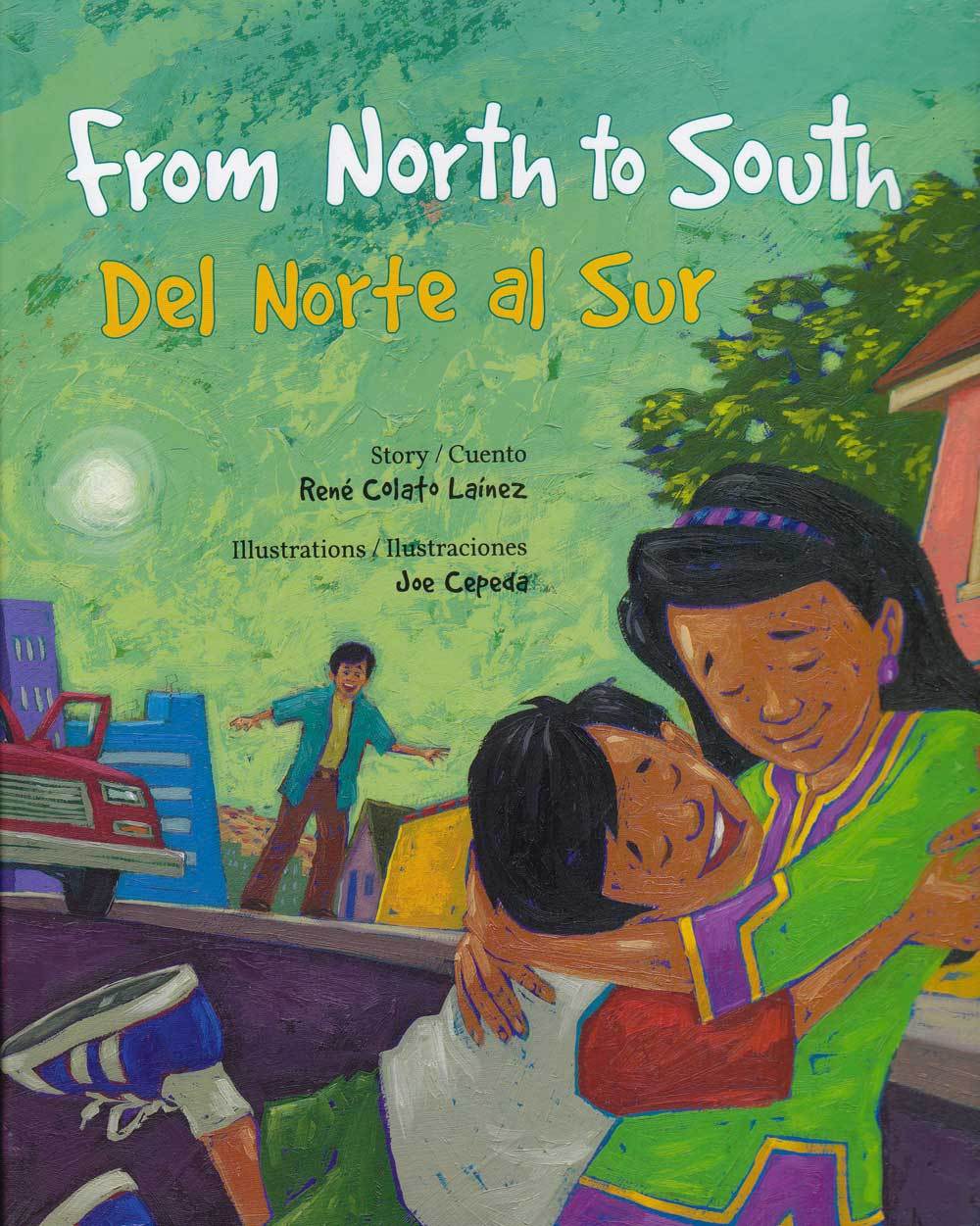
Title: From North to South
Author: Rene Colato Lainez
Illustrator: Joe Cepeda
Awards: International Latino Book Award, Best Bilingual Children’s Book, Americas Book Commended Title
Book Focus: Multicultural, Realistic Contemporary Fiction
Rene Colato Lainez was born in El Salvador where he lived with his family and spent time with his uncle, a well known author there. When El Salvador became involved in a civil war, he and his father left and made their way to the United States. At one point in their journey he was left alone while his father worked. He began writing at that time, and continued to write in high school and college. He is now an award winning author if children’s books with a multicultural focus, helping Latino American children see themselves in stories that reflect their lives.

Joe Cepeda is a Los Angeles native who graduated from Long Beach State with a degree in Illustration. He had illustrated over 30 books, illustrates for magazines and other publications, and speaks at schools. Joe Cepeda is president of the Society of Illustrators of Los Angeles.
From North to South is the story of a young boy, Jose, who lives in California with his parents. One day his Mama is deported back to Mexico, and Jose and his Papa are separated from her. Jose is nervous and excited about visiting his Mama in Mexico, but reassured when he sees her again and helps her settle in to her temporary home. From North to South is full of the love of family and the hope of being together again.
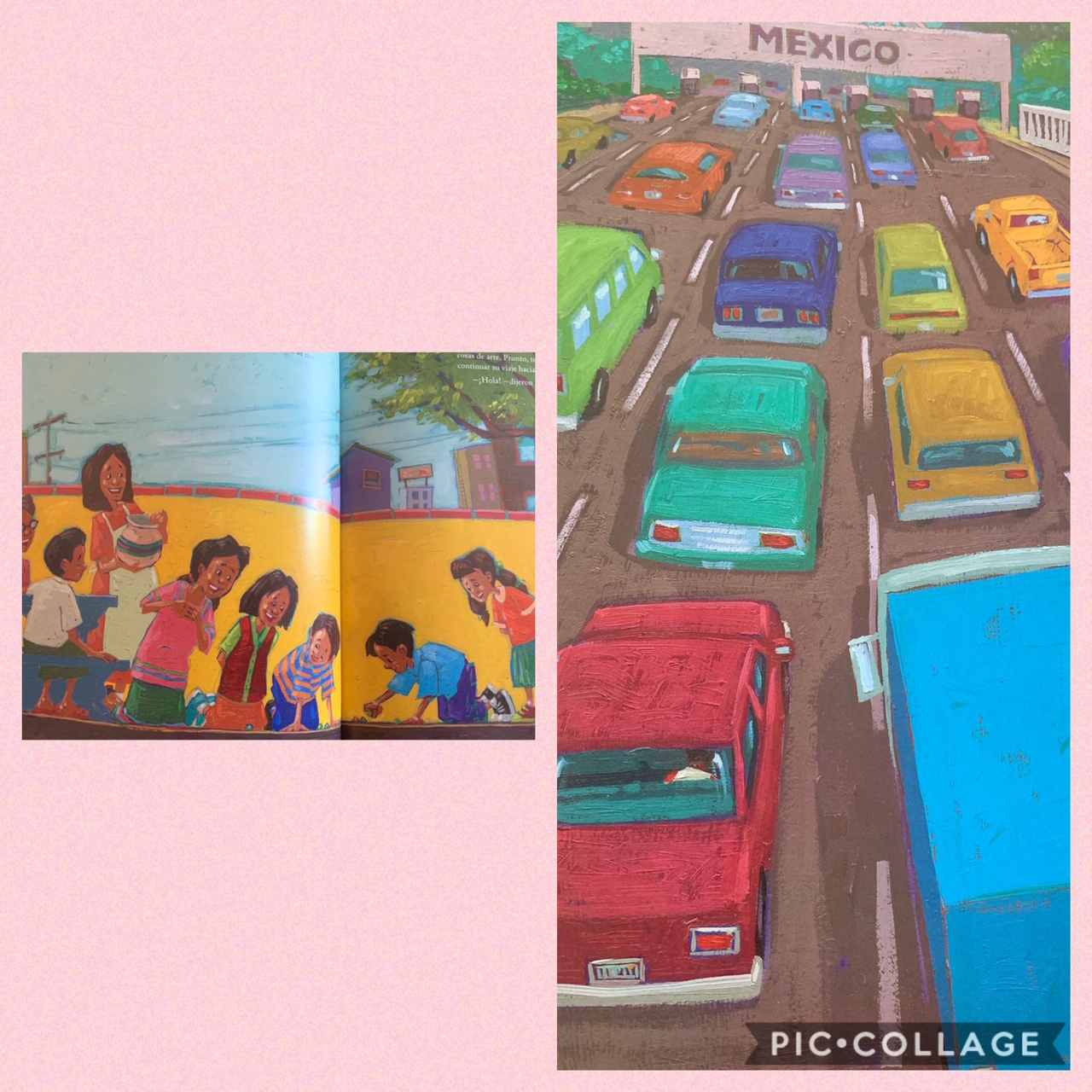
From North to South is an example of a multicultural book. Tunnel et al. stated that, “Well-written books that express multicultural themes or are international in their origins may have a profound effect on readers, prompting a global outlook as well as an understanding that members of the human family have more similarities than differences” (2016, p. 201). This book gives the reader the perspective of Jose, a young boy whose mother has been deported. Jose is sad, just as any child would be sad to be separated from his or her mother, yet From North to South uses cultural details to bring the reader into the setting of the story. There are Spanish words and names throughout the book, they bring Mama her favorite pan dulce, we see cars passing through immigration at the border, and Jose meets other children who are separated from their mothers. When Jose and his father visit his mother in Tijuana, they see children on the streets selling shoe shines and bubble gum. From North to South normalizes deportation and immigration issues, while remaining hopeful and reassuring. Jose said, “I dreamt that Mama had the right papers and we crossed the border together. Above our house, the sky filled with fireworks and I knew that all the other children would see their parent, too” (p. 32). Finally, From North to South has cultural authenticity. Rene Colato Lainez immigrated to the United States as a child and drew from that experience as inspiration for this book.
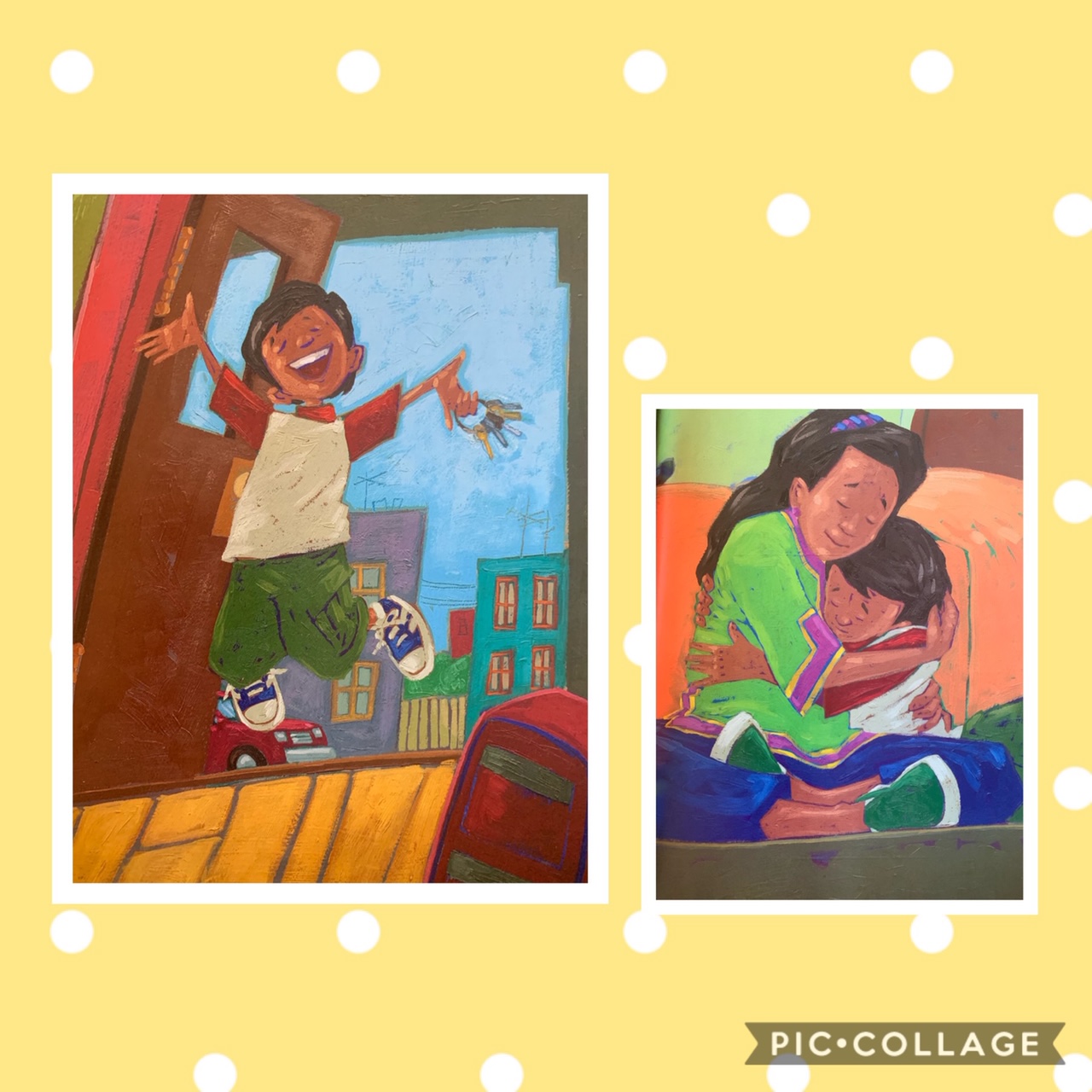
The illustrations provide many elements of visual literacy. The artwork establishes the setting, develops the characters, and reinforces the text. The bright colors in the clothing and buildings capture the essence of Mexico and establish an upbeat mood. The illustration of crossing the border brings understanding to the reader who has never seen a border crossing. The expressions on Jose’s face depicts joy at knowing he will see his mother soon, and sadness at saying good bye.
From North to South is also considered contemporary realistic fiction. Though this is fiction, this type of story could happen and does happen everyday. Many children may have heard about immigration or even know someone who has migrated to the United States. This issue continues to be relevant. The main character is a child that is easy to connect to, and he has recognizable emotions that children can identify with. Tunnel et al. stated about contemporary realistic fiction, “young readers can find their own lives, recognize friends, and meet strangers who can show them different ways of living and thinking” (2016, p. 145).
References
Tunnell, M. O., Jacobs, J. S., Young, T. A., & Bryan, G. (2016). Children’s literature, briefly (6th ed.). Upper Saddle River, NJ: Pearson.
http://www.renecolatolainez.com

 Between the Trees
Hi Erin,
Your posts address many key issues of language elements and visual elements for each of the three books. Your observations highlight the cultural authenticity of each book as well as the story being told through the child’s or adolescent’s perspective which allows adult readers to see the situation through a child’s innocence. Nicely done!
Sherry Taylor
LikeLike