My Grandfather’s Journey

Title: My Grandfather’s Journey

Author/Illustrator: Allan Say

Awards: Caldecott Honor, Oregon Book Award

Focus of Book: Biography Picture Book

Overview of Author:

Allan Say was born in Japan and has lived in both Japan and the United States. He has worked as a sign painter, a photographer, and been in the U.S. Army. He is inspired by Japanese and Japanese American characters.

Book Summary:

My Grandfather’s Journey is the story of the author’s grandfather moving from Japan to the United States, and back again. He is amazed by the landscape of the United States, but also misses his home. Later, the grandson who was born in Japan and visits the United States, finds that he has the same experiences and feelings as his grandfather.

Analysis of Writing Elements

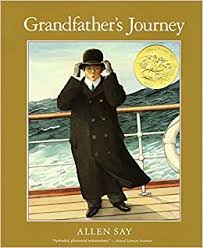
The written text of My Grandfather’s Journey is concise, with each page having only a couple of sentences. The concise nature of the writing makes the story relatable and understandable. Yet the language draws the reader in, similar to poetry. For example, “He marveled at the towering mountains and rivers as clear as the sky” (p. 8). The figurative language shows us what Grandfather is experiencing, instead of telling us. Say’s use of language is precise and does not condescend to the age of the reader. He writes, for example, “He raised warblers and silvereyes, but he could not forget the mountains and rivers of California” (p.22). The language creates a tone of longing, beauty, and appreciation.

My Grandfather’s Journey is a book that promotes sociocultural constructivism. Students are able to look at the world from another perspective and imagine how they might feel in this situation. Students may also have personal or familial connections to the story. These connections and class discussion about this book will promote reflection and construction of meaning.

Reference

Say, A. (1993). Grandfather’s journey. New York, NY: Houghton Mifflin Harcourt.
The Wretched Stone

Title: The Wretched Stone

Author/Illustrator: Chris Van Allsburg

Focus of Book: Fiction Picture Book, Fantasy

Overview of Author:

Chris Van Allsburg is an award winning author and illustrator, who has illustrated and/or written more than twenty books. He is most well known for his book The Polar Express. Chris Van Allsburg has received the Regina Medal for lifetime achievement in children’s literature. He lives in Boston, and is known for placing a little white dog (or part of him) somewhere in all of his books.

Book Summary:

A crew is sailing on a long journey aboard the Rita Anne. They find a mysterious, glowing rock and begin behaving very strangely. The crew is in a strange, feverish state as a strong storm barrages the ship. The crew is eventually rescued and makes it to shore after the stone stops glowing.

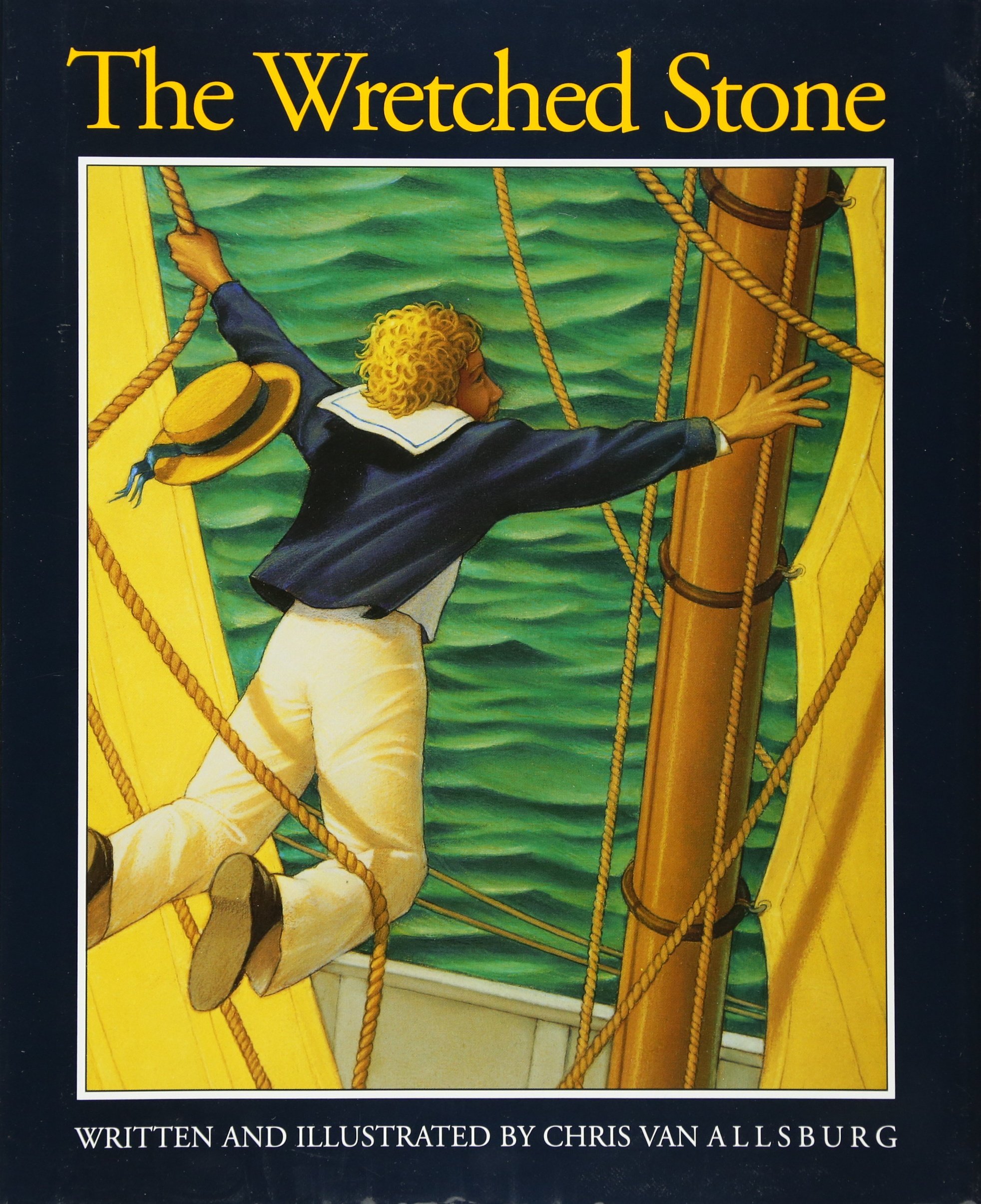
The Wretched Stone is an imaginative and fantastical book that is greatly enhanced by the illustrations. The artwork is done in a realistic, painterly style. The colors are rich and vibrant, and the people and objects look real, like you could put yourself into the scene. Van Allsburg’s use of leading lines to draw in the reader fits in well with the images of ships, ropes, and trees. This is seen especially on pages 2, 6, 8, and 10. The text is written as journal entries. mirroring the realism of the artwork. The illustrations greatly establish the setting and reinforce the text. An additional way that the illustrations interact with the text is to set the mood of the book. The mood of the story changes throughout the text. The story has a fantasy element, and the art helps the reader understand the events.

The Wretched Stone can be interpreted in many ways, depending on the reader’s background and culture. The glowing stone could be a figment of the character’s imagination or a result of the storm. The crew seeming to transform into apes could be the result of fever and sickness or the result of magic. A class discussion could help students construct their own meaning from the text. The Wretched Stone is a unique and thought provoking book that will promote discussion.

Reference

Van Allsburg, C. (1991). The wretched stone. Boston: Houghton Mifflin.

Seven Blind Mice

Title: Seven Blind Mice

Author/Illustrator: Ed Young

Awards: Caldecott Honor

Focus of Book: Fiction picture book

Overview of Author/Illustrator:

Ed Young is an author and illustrator of many books. His childhood was spent in Shanghai and Hong Kong, and he came to the United States as a young adult to study art. He is inspired by Chinese painters and philosophers.

Book Summary:

A group of seven blind mice try to determine the identity of a new and large object near their home. Each mouse discovers a different aspect of the object, and they argue about what the object is until the last mouse figures out that all the aspects add up to be different parts of an elephant.

While The Seven Blind Mice does have elements of counting books and also emphasizes the concept of color and sequencing, I find this book to be more of a Picture Storybook. As stated in Children’s Literature, Briefly, “The Hallmark of the picture storybook is that text and illustrations work together to tell a story” (Tunnel, et al, 2016, p. 76). The intent of the author is to retell a classic fable in a contemporary fashion. The book is a fun and enjoyable way to experience this fable and think about the concept of seeing the big picture in life and seeing things from many perspectives.

The Seven Blind Mice incorporates numerical vocabulary, such as “first,” “second,” and “third,” but does not include a visual representation of numerals or repetitive counting. This book could meet the definition of a “better counting book,” (Tunnel et al, 2016, p. 71) because is allows for the discovery of a larger concept and has high quality illustrations.

Analysis of Visual Elements:

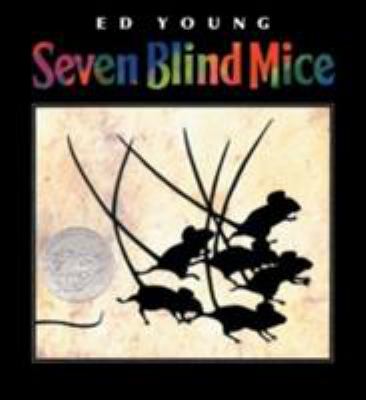
This book is striking in part because of its use of color. Every page is comprised of a black background with a white border. The text is white, and the mice and other objects are bright and mostly primary colors. The use of black and simple color is attention-getting, but also draws parallels to the blindness of the mice, who see only blackness. The painterly style uses impressionism, “which emphasizes light, movement, and color over detail” (Tunnel et al, 2016, p. 40). The elephant is depicted in an almost collage like way, with significant texture and layering. In many of the pages the mice are shown in a vertical line, standing on top of each other. This reinforces counting, color names, and sequencing.

The illustrations in this book are essential to story telling. We are shown part of the elephant and then an image showing what the mouse had “seen.” The reader can see the similar shapes and sizes. This helps the readers identify with the mouse who is sure of what he saw. We are experiencing the text but also what the mice experienced from their points of view.

The Seven Blind Mice is a colorful and engaging book that encourages us to look beyond ourselves and to not only see someone else’s perspective but to expand our thoughts.

References

Tunnell, M. O., Jacobs, J. S., Young, T. A., & Bryan, G. (2016). Children’s literature, briefly (6th ed.). Upper Saddle River, NJ: Pearson.

Young, E. (1992). Seven blind mice. New York, NY: Philomel Books.

The Farmer and the Clown

Title: The Farmer and the Clown

Author/Illustrator: Marla Frazee

Awards: Boston Globe Horn Book Award for Picture Book

Focus of Book: Fiction, wordless picture book

Overview of Author/Illustrator:

Marla Frazee was born and raised in Los Angeles, where she has lived her whole life. Ms. Frazee won a Caldecott Honor award for her books All the World and A Couple of Boys Have the Best Week Ever. She was also awarded the Boston Globe Horn Book Award for her book The Farmer and the Clown. She has written and illustrated several books and has also been the illustrator for other author’s books. She has grown children and an art studio in her backyard.

Summary:

The Farmer and the Clown is a magical and intriguing wordless picture book. The framework for the story line is unique and captivated my interest and imagination. The story begins when a circus train passes by the farmer working in his field. As he watches it rumble by he sees something fall out of the train. He finds a small clown and takes him back to his house where he takes care of him and shows him the farm. The next day he and the little clown go back to the train tacks and train returns. A family of clowns is happy and relieved to have their little boy back.

Analysis of Visual Elements

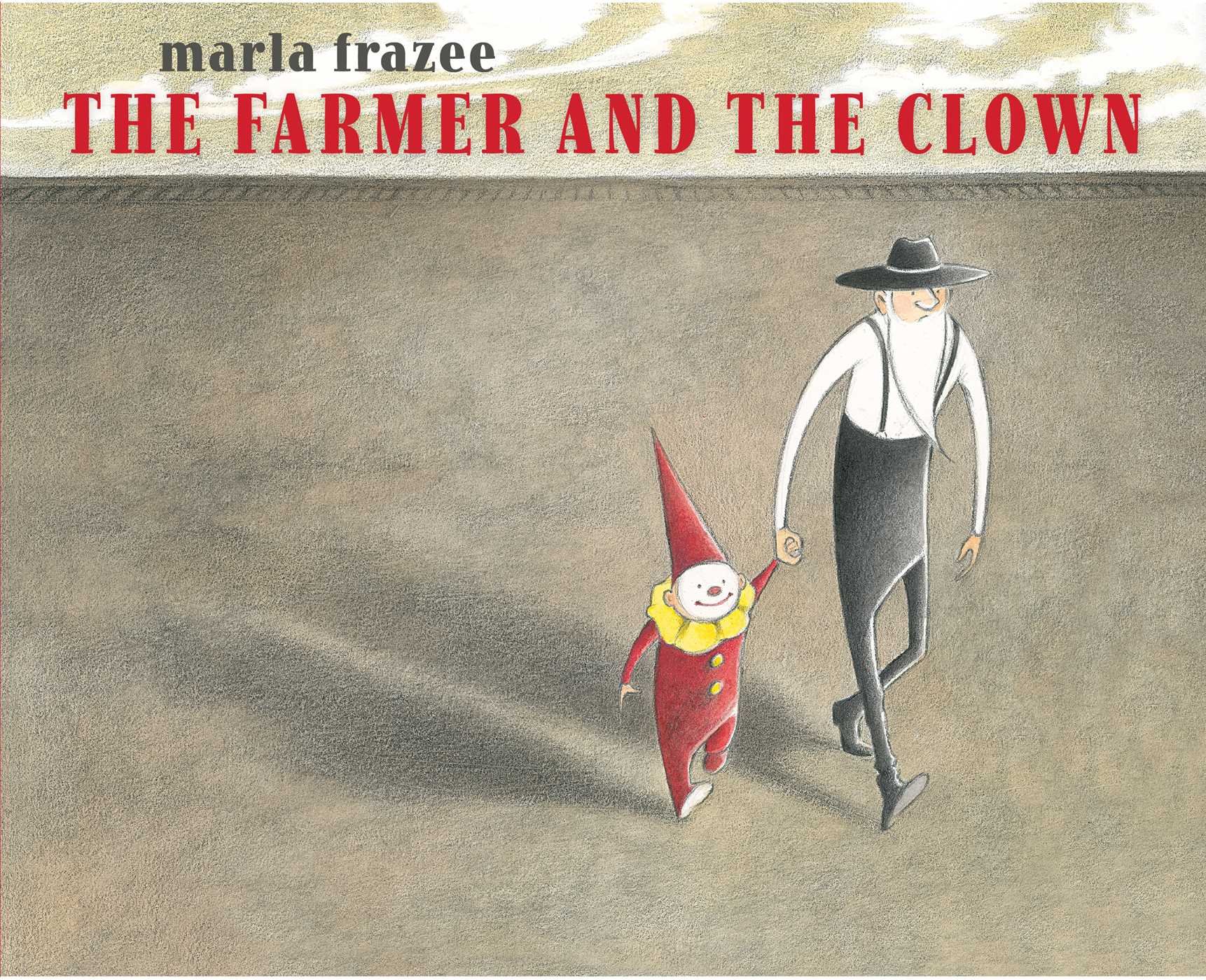
I was immediately drawn to the use of lines in this book and use of white space. The illustrations have just enough detail to carry the story, but are not cluttered or distracting. The art medium appears to be pencil drawings, with some illustrations in color and others in black and white. The illustrations include simple drawings with a focal point and a clean background (p. 1) as well as illustrations of a sequence of action and event panels (p. 8). Some illustrations span two pages while others are on one page. The illustrations are almost like little stories on their own, depicting a story independently. However, overall the artwork connects beautifully and drives the plot of this wordless book. The characters’ expressions are full of emotion, which adds to the plot. For example, on page 13, the farmer washed the little clown’s face, which removed his clown paint. The little boy’s expression and body language is sad, leading us to feel that is he realizing he is not with his family. On page 14 the little boy looks sad and afraid while trying to fall asleep, and the colors are black and white, which match the mood. On page 15, which is the next morning, the farmer make a silly face to cheer up the boy, and the colors are bright to signal a change in mood.

Analysis of Visual Literacy

A wordless picture book is an effective method for increasing children’s visual literacy. In order to process the plot events and the feelings and motivations of the characters, the readers needs to use inferencing skills and visual literacy skills to analyze the illustrations for clues and important details. The Farmer and the Clown uses color, lines, and mood to develop the characters and the plot. For example, on pages 2 and 3, Frazee uses lines to show movement. These movement lines indicate the speed of the train, the movement of the boy falling off the train, and the rake being thrown to the ground. At the end of the book, the reader may notice that the boy and the farmer have traded hats, which symbolizes their friendship. The last page shows the farmer walking away with the monkey from the circus train. His life has been enriched in more than one way by this experience. These details add detail and emotion to the story. The Farmer and the Clown is an excellent example of visual story telling.

Sociocultural Constructivism

This book features two characters seeing the world from a new perspective, which highlights the importance of sociocultural constructivism. Children can connect this book to times in their own lives that they may have experienced a different culture and what emotions they may have felt. The story is a beautiful picture of an unlikely friendship, across cultural and generational lines.

Reference

Frazee, M. (2014). The farmer and the clown. New York: Beach Lane Books.