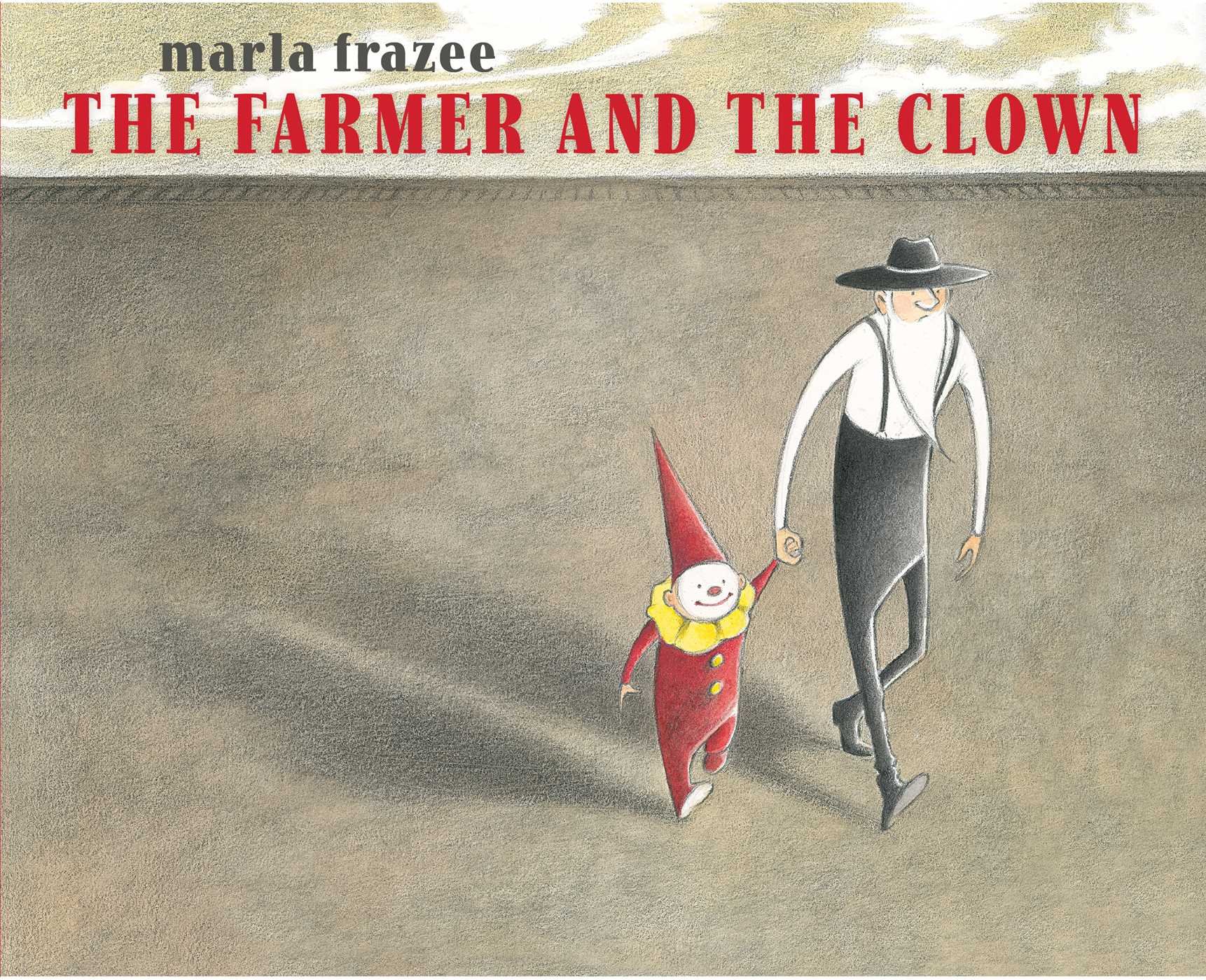
Title: The Farmer and the Clown
Author/Illustrator: Marla Frazee
Awards: Boston Globe Horn Book Award for Picture Book
Focus of Book: Fiction, wordless picture book
Overview of Author/Illustrator:
Marla Frazee was born and raised in Los Angeles, where she has lived her whole life. Ms. Frazee won a Caldecott Honor award for her books All the World and A Couple of Boys Have the Best Week Ever. She was also awarded the Boston Globe Horn Book Award for her book The Farmer and the Clown. She has written and illustrated several books and has also been the illustrator for other author’s books. She has grown children and an art studio in her backyard.
Summary:
The Farmer and the Clown is a magical and intriguing wordless picture book. The framework for the story line is unique and captivated my interest and imagination. The story begins when a circus train passes by the farmer working in his field. As he watches it rumble by he sees something fall out of the train. He finds a small clown and takes him back to his house where he takes care of him and shows him the farm. The next day he and the little clown go back to the train tacks and train returns. A family of clowns is happy and relieved to have their little boy back.
Analysis of Visual Elements
I was immediately drawn to the use of lines in this book and use of white space. The illustrations have just enough detail to carry the story, but are not cluttered or distracting. The art medium appears to be pencil drawings, with some illustrations in color and others in black and white. The illustrations include simple drawings with a focal point and a clean background (p. 1) as well as illustrations of a sequence of action and event panels (p. 8). Some illustrations span two pages while others are on one page. The illustrations are almost like little stories on their own, depicting a story independently. However, overall the artwork connects beautifully and drives the plot of this wordless book. The characters’ expressions are full of emotion, which adds to the plot. For example, on page 13, the farmer washed the little clown’s face, which removed his clown paint. The little boy’s expression and body language is sad, leading us to feel that is he realizing he is not with his family. On page 14 the little boy looks sad and afraid while trying to fall asleep, and the colors are black and white, which match the mood. On page 15, which is the next morning, the farmer make a silly face to cheer up the boy, and the colors are bright to signal a change in mood.
Analysis of Visual Literacy
A wordless picture book is an effective method for increasing children’s visual literacy. In order to process the plot events and the feelings and motivations of the characters, the readers needs to use inferencing skills and visual literacy skills to analyze the illustrations for clues and important details. The Farmer and the Clown uses color, lines, and mood to develop the characters and the plot. For example, on pages 2 and 3, Frazee uses lines to show movement. These movement lines indicate the speed of the train, the movement of the boy falling off the train, and the rake being thrown to the ground. At the end of the book, the reader may notice that the boy and the farmer have traded hats, which symbolizes their friendship. The last page shows the farmer walking away with the monkey from the circus train. His life has been enriched in more than one way by this experience. These details add detail and emotion to the story. The Farmer and the Clown is an excellent example of visual story telling.
Sociocultural Constructivism
This book features two characters seeing the world from a new perspective, which highlights the importance of sociocultural constructivism. Children can connect this book to times in their own lives that they may have experienced a different culture and what emotions they may have felt. The story is a beautiful picture of an unlikely friendship, across cultural and generational lines.
Reference
Frazee, M. (2014). The farmer and the clown. New York: Beach Lane Books.

 Between the Trees
Love your comments about each book. Great Job!
LikeLike